Why Commercial HVAC Cleaning Is Important for Businesses
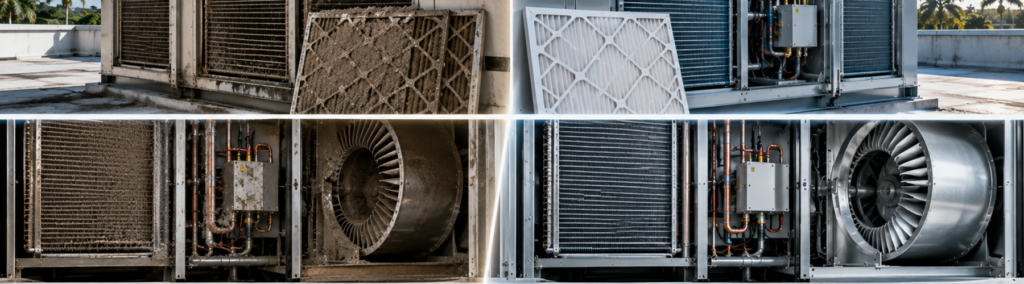
If your commercial HVAC system has not been professionally cleaned in a while, it is quietly costing you money right now. Dust, grease, and moisture build up inside coils, ductwork, and blower components even when everything looks fine from the outside.
In Florida’s heat and humidity, that buildup happens faster than most business owners expect, and it does not just affect comfort. It drives up energy bills, wears down expensive equipment, and reduces overall system performance.
This is the type of problem Sharkey Air regularly helps businesses address. As a family-owned HVAC company that has served Florida’s Treasure Coast since 1989, Sharkey Air works with office buildings, restaurants, medical offices, warehouses, schools, and retail spaces across Martin, St. Lucie, and Palm Beach Counties. Below, we break down what actually happens inside a dirty commercial HVAC system, why it matters more here than almost anywhere else in the country, and how a professional cleaning and maintenance plan protects your business.
What happens when dust, dirt, and moisture build up inside a commercial HVAC system?
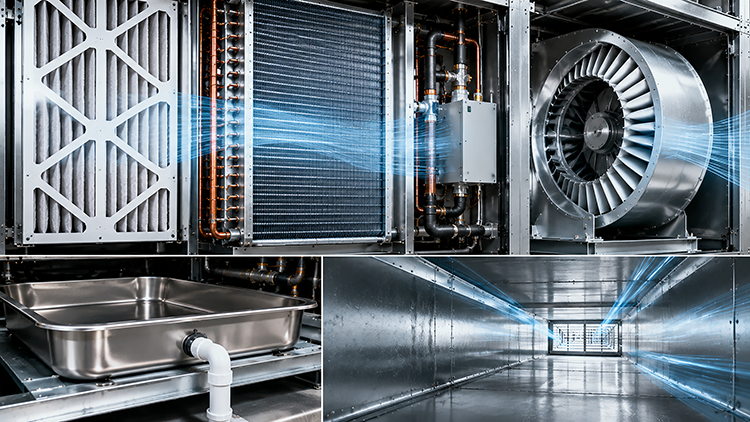
A commercial HVAC system has three main areas where buildup becomes a problem: the coils, the ductwork, and the blower assembly. The evaporator coil sits indoors and absorbs heat and humidity from the air, while the condenser coil sits outdoors and releases that heat. Both coils have narrow metal fins designed for airflow, and every hour the system runs, it pulls in a small amount of dust, grease, and airborne particles that settle on those fins.
Over time, that layer acts like insulation. It blocks the heat transfer that the coil is designed to perform, so the system has to run longer and harder to reach the same temperature. Ductwork and blower components collect similar buildup, which restricts airflow and pushes any trapped dust, debris, or microbial growth directly into the air your building breathes. None of this happens overnight, which is exactly why it is so often ignored until the bills or the complaints start piling up.
How much does a dirty HVAC system really cost your business in energy?
ENERGY STAR’s maintenance guidance states that dirty coils reduce a system’s ability to cool effectively, forcing it to run longer, increasing energy costs, and shortening equipment life.
For context on scale, the U.S. Energy Information Administration reports that heating, ventilation, and cooling functions together make up the single largest share of energy use in commercial buildings nationwide.
When HVAC is already your biggest energy expense, even a modest efficiency loss from dirty coils becomes one of the most expensive things a building owner can ignore.
A few ways this shows up in a real commercial building:
- Utility bills creep upward over several months with no clear explanation.
- The system runs in longer cycles to reach the same setpoint.
- Rooms near the end of a duct run feel warmer or more humid than the rest of the space.
Why do Florida’s heat and humidity make this worse for Treasure Coast businesses?
Most parts of the country give an HVAC system a break during cooler months. On the Treasure Coast, commercial systems in Martin, St. Lucie, and Palm Beach Counties run hard for most of the year, which means coils, ducts, and blowers accumulate buildup faster and have far less downtime to recover. Add in Florida’s humidity, and you get an environment that is close to ideal for mold growth on and around HVAC components.
The U.S. Environmental Protection Agency recommends keeping indoor relative humidity below 60 percent, ideally between 30 and 50 percent, specifically to prevent mold growth in schools and commercial buildings. South Florida’s outdoor humidity regularly pushes past that range, so a commercial HVAC system here is doing double duty: cooling the space while fighting a constant humidity load. When coils and drain pans are already coated in dust, they hold onto that extra moisture even longer, which is exactly the combination mold needs to take hold.
Why is commercial HVAC cleaning a job for trained technicians, not a general cleaning crew?
Coil and duct cleaning is not the same as wiping down a vent cover. Evaporator coils sit next to electrical components and refrigerant lines, and improper handling can bend delicate fins, damage wiring, or void a manufacturer’s warranty. Cleaning solutions also matter: the wrong chemical can corrode a coil or leave residue that attracts even more dust.
A trained technician knows how to access rooftop units and air handlers safely, how to clean coils without restricting airflow further, and how to inspect belts, motors, and electrical connections at the same time. This is precisely why Sharkey Air’s commercial maintenance visits combine coil cleaning with filter changes, refrigerant level checks, thermostat calibration, belt and motor inspection, and electrical testing in a single, licensed service call rather than treating cleaning as a standalone chore.
How often should a commercial HVAC system be professionally cleaned?
There is no single answer for every building, which is why a one-size-fits-all schedule rarely works well. Most commercial systems benefit from quarterly professional service, though the right interval depends on your building type, occupancy, and equipment age. High-demand environments like restaurants and medical offices often need more frequent attention because of grease, food particles, or stricter air quality expectations.
Sharkey Air builds a maintenance plan around your specific property rather than applying a generic checklist. A typical plan includes:
- A full system evaluation covering age, usage, and access before setting a schedule
- Scheduled preventive visits on a monthly, quarterly, or semi-annual basis
- A written report after every visit detailing what was cleaned, checked, and recommended
- Priority scheduling and discounted rates for clients already enrolled in a plan
Final Takeaways
- Quarterly professional service is a reasonable general standard for most Treasure Coast businesses, with more frequent visits for restaurants and medical facilities.
- Clean coils and ducts protect both your compressor and the air quality inside your building.
- Filter changes are worth doing between visits, but coil and duct cleaning call for a licensed technician.
- A consistent cleaning schedule keeps small dust buildup from turning into a major repair or replacement expense.
Closing Thoughts
Commercial HVAC cleaning is easy to put off because the effects build up slowly, until an energy bill spike, a comfort complaint, or a breakdown makes it impossible to ignore. Since 1989, Sharkey Air has helped businesses across Martin, St. Lucie, and Palm Beach Counties stay ahead of that curve with maintenance plans built around real coil cleaning, honest reporting, and licensed technicians who know how Florida’s climate pushes commercial systems to their limits. If it has been a while since your system’s coils and ducts were professionally serviced, Sharkey Air’s commercial HVAC maintenance program is a straightforward place to start.
Frequently Asked Questions
Is commercial HVAC cleaning included in a regular maintenance visit?
Yes. A standard commercial maintenance visit typically includes coil cleaning alongside filter changes, refrigerant checks, thermostat calibration, and electrical testing, rather than treating cleaning as a separate service call.
How often should commercial HVAC coils be cleaned?
Annual cleaning is generally treated as a minimum, but most commercial buildings on the Treasure Coast benefit from quarterly service due to year-round cooling demand and humidity, with restaurants and medical facilities often needing more frequent attention.
What are the warning signs that my commercial HVAC system needs cleaning?
Common signs include musty odors near vents, uneven cooling between rooms, rising energy bills without an obvious cause, and an uptick in employee complaints about air quality or comfort.