How Commercial Heating and Air Conditioning Maintenance Protects Your Business in Palm Beach, Martin and St. Lucie Counties
Key Takeaways
- Florida’s heat and humidity push commercial HVAC systems harder than most climates, making routine maintenance a genuine business necessity, not just a nice-to-have.
- A professional maintenance visit goes well beyond a filter swap; it covers coils, refrigerant, electrical components, belts, thermostats, and airflow diagnostics.
- Well-maintained commercial heating and air conditioning systems use significantly less energy, which directly reduces monthly operating costs.
- A structured maintenance plan from a licensed local contractor includes scheduled visits, clear reporting after each visit, and priority access to service when something unexpected comes up.
If your business operates anywhere in Palm Beach, Martin, or St. Lucie County, you already know that the climate is not forgiving. Summers stretch long and brutal, humidity never really lets up, and your commercial heating and air conditioning system works through conditions that would wear down equipment in almost any other state. For business owners, that kind of operational reality means one thing: your HVAC system either gets maintained on a schedule, or it fails at the worst possible time.
This article breaks down exactly why routine commercial HVAC maintenance matters for Treasure Coast businesses, what gets inspected during a professional visit, how Florida’s climate accelerates system wear, and what a structured maintenance plan from a contractor like Sharkey Air actually looks like in practice.
Why Does Florida’s Climate Put Extra Strain on Commercial HVAC Systems
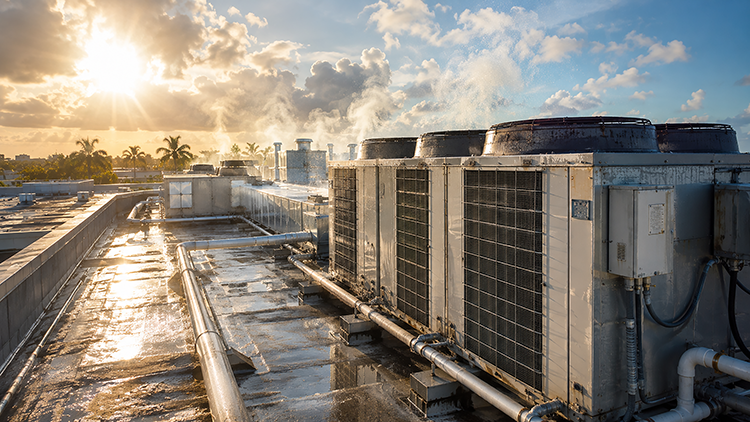
Most commercial HVAC equipment is designed to handle a mix of seasons, including months where the system runs lightly. In South Florida, that relief barely exists. According to NOAA’s Climate Prediction Center, Florida consistently records among the highest cooling degree days of any state in the continental U.S., a technical measure of how much energy is needed to cool a building on any given day, reflecting just how relentlessly the Treasure Coast climate demands mechanical cooling year-round. From late spring through early fall, commercial systems run almost continuously to manage both heat and humidity, which means components accumulate wear far faster than they would in a temperate climate.
Humidity is the particular challenge that sets the Treasure Coast apart. Moisture accelerates corrosion on coils and electrical contacts, creates conditions where biological growth can develop inside air handlers, and forces systems to work harder just to maintain comfortable indoor conditions. A system that might require service every 12 months in a drier region may genuinely need attention every quarter here.
What Actually Happens During a Professional Commercial HVAC Maintenance Visit
A lot of business owners assume a maintenance visit means someone swaps out the air filter and checks that the unit is still running. In reality, a thorough commercial maintenance inspection covers the entire system, because a filter change alone will not catch what is quietly going wrong elsewhere.
A proper visit from a licensed commercial HVAC technician typically includes:
- Filter inspection and replacement to protect airflow and indoor air quality
- Evaporator and condenser coil cleaning to restore heat transfer efficiency (dirty coils are one of the most common causes of energy waste and compressor strain)
- Refrigerant level check to confirm the system is operating within manufacturer specifications
- Electrical component inspection, including contactors, capacitors, and wiring, to catch deterioration before it causes a failure
- Belt and motor inspection on systems that use them, checking tension and signs of wear
- Thermostat and controls calibration to ensure the system responds accurately to temperature demand
- Drainage line clearing to prevent condensate backups, which are a frequent source of water damage and mold risk in Florida’s humid environment
- Airflow and static pressure diagnostics to confirm that conditioned air is actually reaching the spaces that need it
Each of these checks serves a purpose. Skipping any one of them creates a blind spot that can turn into an expensive service call months later.
What Does a Structured Commercial HVAC Maintenance Plan Include
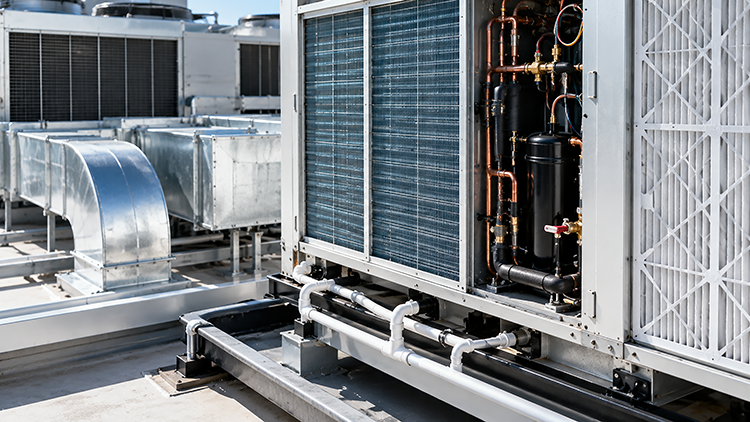
A maintenance plan is different from calling for service only when something breaks. It is a proactive arrangement where a licensed contractor schedules visits on a defined cadence, performs a consistent scope of work each time, and documents what was found and serviced so you have a clear record of your system’s health over time.
For most commercial properties in the Treasure Coast region, quarterly visits make practical sense given the climate. High-demand environments, such as restaurant kitchens, medical offices, or facilities with continuous occupancy, may benefit from more frequent attention.
A well-structured plan typically covers:
- Scheduled preventive visits on a cadence matched to your system’s usage and operating environment
- Full-system inspections at each visit rather than a checklist-only approach
- Written reporting after every visit, documenting what was checked, what was serviced, and any developing concerns that should be watched or addressed
- Priority scheduling so that if an urgent issue does arise, you are not waiting behind unscheduled calls
- Discounted rates on repairs when a plan is in place, because the relationship between contractor and client is ongoing rather than transactional
That last point matters. When a contractor knows your system’s history, they can make faster and more accurate diagnostic decisions. They are not walking into your mechanical room cold every time something needs attention.
How Does Commercial Heating and Air Conditioning Maintenance Protect Businesses Specifically in Palm Beach, Martin, and St. Lucie Counties
The broader context of operating in this region is worth addressing directly. Palm Beach, Martin, and St. Lucie counties share a climate profile, but businesses here also deal with specific code and inspection requirements that maintenance records can directly support.
Florida building codes and many commercial lease agreements include provisions around HVAC system condition and service documentation. If you are a property owner, having a documented maintenance history protects you during inspections and in tenant relationships. If you are a business tenant responsible for your own HVAC, proof of regular service can matter when questions about system condition arise at lease end.
Beyond compliance, there is the straightforward operational reality. A restaurant in Palm Beach Gardens, a medical office in Stuart, or a retail location in Port St. Lucie all share the same risk: if the air conditioning fails during a Florida summer, the business cannot function. Customers leave. Staff cannot work safely. In some industries, like food service or healthcare, a system failure can mean regulatory issues on top of lost revenue.
For businesses in these situations, having Sharkey Air on a maintenance plan means there is already a licensed, locally based team familiar with your system before a crisis ever develops.
What Should You Look for in a Commercial HVAC Maintenance Contractor on the Treasure Coast
Choosing the right contractor matters as much as choosing to maintain in the first place. A few things worth evaluating:
Licensing and local experience
Florida requires HVAC contractors to hold a state license, and local experience matters because a contractor familiar with the regional climate and the specific challenges of South Florida buildings will make better recommendations than one applying a generic national approach.
Customized service rather than one-size-fits-all packages
Different building types have different needs. An office building with standard roof-mounted equipment has different maintenance requirements than a warehouse with industrial exhaust systems or a retail space with multiple packaged units. Your maintenance plan should reflect your actual equipment and usage.
Transparent reporting
After every visit, you should receive documentation of what was inspected, what was serviced, and what needs attention. If a contractor cannot provide that, you have no visibility into the condition of equipment you rely on every day.
Responsive service when things go wrong
Even with excellent maintenance, equipment sometimes fails. A contractor with whom you have a maintenance relationship should have a clear process for prioritizing your calls, not putting you in the same queue as someone calling for the first time.
How Sharkey Air Approaches Commercial HVAC Maintenance on the Treasure Coast
Sharkey Air is a family-owned HVAC company founded in 1989 and based in Stuart, Florida. Now led by the second generation of the Sharkey family, the company serves commercial properties across Martin, Palm Beach, and St. Lucie counties, covering everything from office buildings and retail centers to warehouses and multi-tenant commercial properties.
Their commercial heating and air conditioning maintenance programs are built around customized service schedules, meaning the visit frequency and scope are matched to your building’s equipment, occupancy, and operational demands rather than a fixed package that may not fit your situation.
After each service visit, clients receive a digital summary of what was inspected, what was serviced, and any findings or recommendations that came out of the visit.
Final Takeaways
- Florida’s heat and humidity accelerate wear on commercial HVAC components in ways that make quarterly maintenance the realistic standard for most Treasure Coast businesses, not an optional upgrade.
- Professional maintenance visits cover the entire system; coils, refrigerant, electrical components, belts, drainage, and airflow diagnostics, not just visible parts like filters.
- Maintenance records support code compliance, lease terms, and manufacturer warranty requirements, which creates practical business value beyond equipment health.
- A structured plan with a licensed local contractor provides documented reporting, scheduled visits, and priority access to service, which is qualitatively different from calling for help only when something has already failed.
- Choosing a contractor with genuine local experience in the Treasure Coast region means working with someone who understands the specific climate, code environment, and operational demands your building faces.
Running a business in Palm Beach, Martin, or St. Lucie County means accepting that your commercial heating and air conditioning system works harder here than it would almost anywhere else in the country. The businesses that stay ahead of that reality by investing in structured, documented maintenance programs protect their equipment, their energy budgets, and ultimately their ability to keep operating without interruption.
At Sharkey Air, the team has spent decades serving commercial properties across the Treasure Coast, and the approach has always been the same: understand your system, maintain it properly, and be there when you need help. If you are ready to put a maintenance plan in place for your facility, reaching out to Sharkey Air is a straightforward place to start.
Frequently Asked Questions
How often should commercial HVAC maintenance be performed in Florida?
For most commercial properties on the Treasure Coast, quarterly service is the practical standard given the year-round demand the climate places on equipment. Properties with especially high occupancy or process heat loads, such as commercial kitchens or server rooms, often need attention more frequently than that.
What is actually included in a commercial HVAC maintenance visit?
A thorough visit covers filter service, coil cleaning, refrigerant level verification, electrical component inspection, belt and motor checks, thermostat calibration, drain line clearing, and airflow diagnostics. The goal is to assess the entire system, not just the most visible components.
Does a commercial HVAC maintenance plan help with code compliance?
Documented maintenance records support compliance with Florida building codes and can satisfy manufacturer service requirements that protect warranty coverage. For commercial property owners, having that documentation readily available also simplifies inspections and tenant conversations about system condition.