How Commercial Ducted Air Conditioning Works in South Florida
Key Takeaways
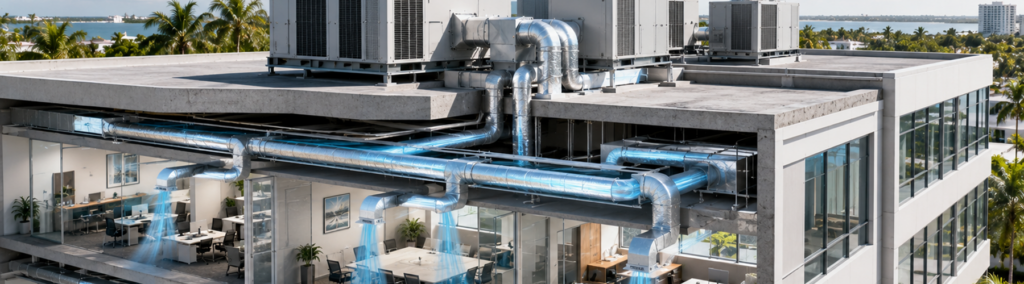
- A commercial ducted AC system moves conditioned air from a central unit through a network of supply and return ducts to every occupied space in the building.
- The air handler, supply ducts, return ducts, dampers, and thermostats each play a specific role in how well a system performs.
- Duct design and airflow balance are critical in South Florida’s climate, where systems run far more intensely than in most other parts of the country.
- Scheduled professional maintenance by a licensed local contractor is what keeps all these components working together efficiently over the long term.
If you manage or own a commercial property on Florida’s Treasure Coast, your ducted air conditioning system is one of the most important pieces of infrastructure in the building. It shapes whether tenants are comfortable, whether energy bills stay manageable, and whether the system itself lasts. But most building owners rarely think about how the system actually works, only noticing it when something goes wrong.
This article walks through how a commercial ducted AC system functions from the central unit all the way to the occupied spaces, and explains why proper design and scheduled professional maintenance by a licensed local contractor like Sharkey Air makes a measurable difference in performance, cost, and equipment lifespan across Martin, Palm Beach, and St. Lucie County commercial properties.
What Does a Commercial Ducted Air Conditioning System Actually Do
A commercial ducted system has one core job: take warm, humid air from inside your building, remove the heat and moisture, and distribute the cooled, conditioned air back to every occupied zone. Unlike a single-room unit, a ducted system handles the entire building from one centralized setup. The system runs continuously during business hours in South Florida, often for 10 to 14 hours a day, which is why every component needs to be properly sized, balanced, and maintained.
What Are the Main Components and How Do They Work Together
Understanding the key parts of your system helps you have more informed conversations with your HVAC contractor and recognize early warning signs of a problem.
The Central Cooling Unit
This is where refrigeration happens. In most South Florida commercial buildings, this is either a rooftop packaged unit or a split system with a condensing unit located outside. The condensing unit rejects heat from the refrigerant to the outdoor air. In a South Florida summer, outdoor temperatures regularly exceed 90 degrees, which means the condensing unit works significantly harder than it would in a cooler climate. Dirty condenser coils or low refrigerant charge can reduce the unit’s ability to reject heat, which raises energy consumption and accelerates wear.
The Air Handler
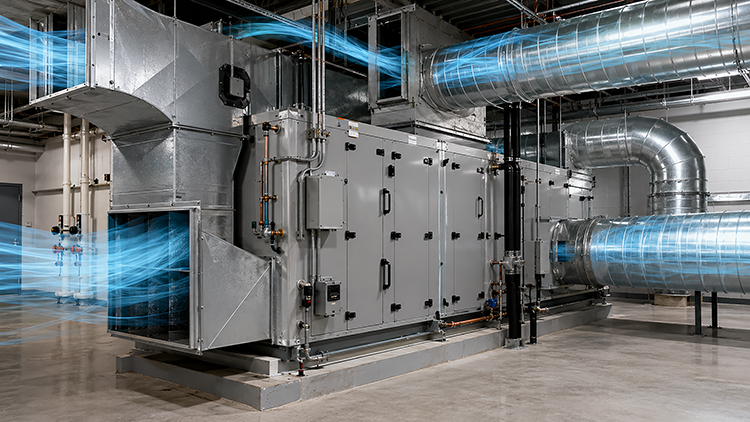
The air handler sits on the indoor side of the system. It houses the evaporator coil, the blower motor, and the filter bank. Warm return air is pulled across the evaporator coil, where heat and moisture are removed. The blower then pushes the cooled, dehumidified air into the supply duct network. If the evaporator coil is dirty or the blower motor is running outside of its designed speed range, airflow is reduced across every zone in the building.
Supply Ducts and Diffusers
Supply ducts carry conditioned air from the air handler out to each zone. Diffusers at the end of each supply branch distribute that air into the occupied space. The layout of the supply duct network, including duct sizing, branch lengths, and diffuser placement, determines how evenly air is distributed. A poorly designed or damaged supply network creates hot and cold spots across the building, even when the central unit is functioning perfectly.
Return Ducts and Grilles
Return ducts pull warm air from occupied spaces back to the air handler to be cooled again. For the system to work properly, return air volume needs to closely match supply air volume. When return paths are blocked, undersized, or leaking, pressure imbalances develop. These imbalances cause some zones to receive too much air while others receive too little, and they force the blower to work harder than it should.
Dampers
Dampers are adjustable plates inside the ductwork that control airflow to individual branches or zones. They can be manual or motorized. In buildings with multiple zones or varying occupancy schedules, motorized dampers allow airflow to be directed where it is actually needed. Dampers that are stuck, corroded, or improperly set throw off the balance of the entire duct system and make it nearly impossible to maintain consistent temperatures across the building.
Thermostats and Controls
The thermostat or building control system tells the HVAC equipment when to run and at what capacity. In commercial buildings, programmable or smart controls allow the system to reduce output during unoccupied hours and ramp back up before occupancy begins. A thermostat that is poorly placed, out of calibration, or operating with a faulty sensor will cause the system to cycle incorrectly, which wastes energy and creates comfort complaints.
Why Does South Florida’s Climate Put Extra Demand on Commercial Duct Systems
South Florida’s heat and humidity are not just uncomfortable for occupants. They create real stress on every component of a commercial ducted system. Most of the country runs HVAC equipment seasonally. In Martin, Palm Beach, and St. Lucie Counties, commercial systems run at full demand for eight to ten months of the year, sometimes longer.
High ambient temperatures reduce the efficiency of the condensing unit. High humidity increases the latent load on the evaporator coil, meaning the system has to do more work to remove moisture from the air before it can reach the target temperature. According to the U.S. Energy Information Administration, air conditioning accounts for approximately 15% of electricity consumption in commercial buildings, and in Florida’s climate, that share is meaningfully higher than the national average. A system that is not designed correctly for local conditions or not maintained regularly will consume far more energy than it should.
How Does Duct Leakage Affect Commercial Buildings in Florida
Duct leakage is one of the most underappreciated sources of energy waste in commercial properties. When supply ducts develop cracks, loose joints, or failed sealant, conditioned air leaks into unconditioned spaces like ceiling plenums or mechanical rooms before it ever reaches the occupied zone. Return leaks pull unconditioned air into the air handler, which increases the conditioning load.
Identifying and addressing duct leakage is a meaningful part of a thorough commercial HVAC maintenance program.
How Does Airflow Balance Affect Tenant Comfort and Equipment Health
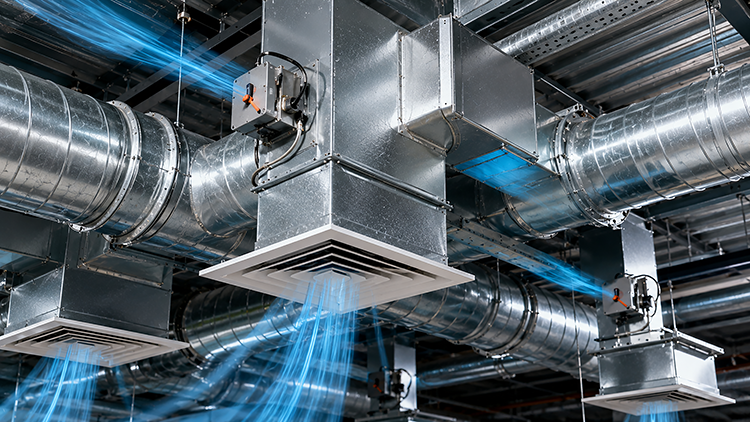
Airflow balance refers to the proper distribution of supply and return air across all zones so that each space receives the right amount of conditioned air. When a duct system is balanced, every zone reaches its setpoint without the blower or compressor overworking. When the system is out of balance, some zones will be consistently too warm, others too cold, and the central equipment will run longer cycles to try to compensate.
In a commercial building with multiple tenants or zones, airflow imbalances generate comfort complaints and, over time, contribute to premature wear on blower motors and compressors. Balancing requires actual measurement of airflow at supply and return points, not just adjusting thermostat settings. It is a technical process that should be part of any professional commercial HVAC maintenance visit.
What Happens When Commercial Ducted Systems Are Not Maintained
Neglected commercial ducted systems do not fail all at once. They degrade gradually, and each stage of deterioration costs money. Dirty evaporator coils reduce heat transfer, causing longer run times and higher electricity use. Clogged or restricted filters reduce airflow, which stresses the blower motor and can freeze the evaporator coil. Worn belts and failing motor bearings introduce vibration and heat that accelerate component failure. Refrigerant that is slightly undercharged will cause the compressor to work harder than its design rating, shortening its lifespan.
According to ENERGY STAR, well-maintained HVAC systems can reduce energy use by up to 15% compared to neglected systems of the same type and age. In a commercial building spending several thousand dollars a month on electricity, that margin is significant. More importantly, catching small mechanical problems during a scheduled maintenance visit is far less expensive than an emergency repair during a South Florida summer, when technician availability is at a premium and system downtime directly affects business operations.
Final Takeaways
- Every component in a commercial ducted system, from the air handler to the supply diffusers, depends on the others functioning correctly. A weakness in any one area affects the whole building.
- Duct leakage is a major but often invisible source of energy waste. Buildings with significant duct leakage pay more to condition less of their space than they should.
- South Florida’s extended cooling season and high humidity create a higher maintenance demand than most other climates. Systems here simply accumulate more operating hours per year.
- Airflow balance is a measurable, correctable condition that directly affects both tenant comfort and equipment longevity.
- Scheduled professional maintenance is not a discretionary expense. It is what keeps energy bills predictable, avoids emergency breakdowns during peak season, and protects the lifespan of an expensive capital asset.
Closing
Commercial ducted air conditioning is not a set-it-and-forget-it system, especially in South Florida’s demanding climate. The components that keep conditioned air moving through your building efficiently need regular professional attention to perform as designed. At Sharkey Air, we have been serving commercial properties across Florida’s Treasure Coast since 1989.
Our licensed technicians understand how local conditions affect system performance, and our tailored commercial HVAC maintenance programs are built around what your specific building actually needs. If your system is overdue for a maintenance visit, or if you have tenants raising comfort concerns, contact Sharkey Air to schedule a system evaluation.
Frequently Asked Questions
How often should a commercial ducted AC system be serviced in South Florida?
How often should a commercial ducted AC system be serviced in South Florida?
Most commercial systems benefit from quarterly service visits, though buildings with high occupancy loads, older equipment, or specialized environments like restaurants or medical offices may require more frequent attention. Florida’s extended cooling season means the system accumulates operating hours faster than in most other climates, which makes consistent maintenance more important.
Can a properly maintained duct system improve indoor air quality in my building?
Yes. When ducts are clean, sealed, and carrying balanced airflow, they deliver air more evenly and with fewer contaminants than a leaking or dirty system. Return duct leaks can pull unconditioned air, dust, and humidity into the system from unconditioned spaces, all of which affect the air quality in occupied zones. Maintenance that addresses coil cleanliness, filter condition, and duct integrity directly improves what your tenants breathe.
How do I know if my commercial duct system is balanced correctly?
Consistent temperature complaints from tenants in specific areas of the building are the most common indicator of an airflow imbalance. Your HVAC contractor can verify balance through direct measurement at supply diffusers and return grilles. If the measurements show significant deviation from design specifications, damper adjustments or duct modifications may be needed.